
Wine Tasting in Côtes du Forez: Exploring an Overlooked Volcanic Terroir in the Loire
Wine tasting in Côtes du Forez, Monday, November 24th.
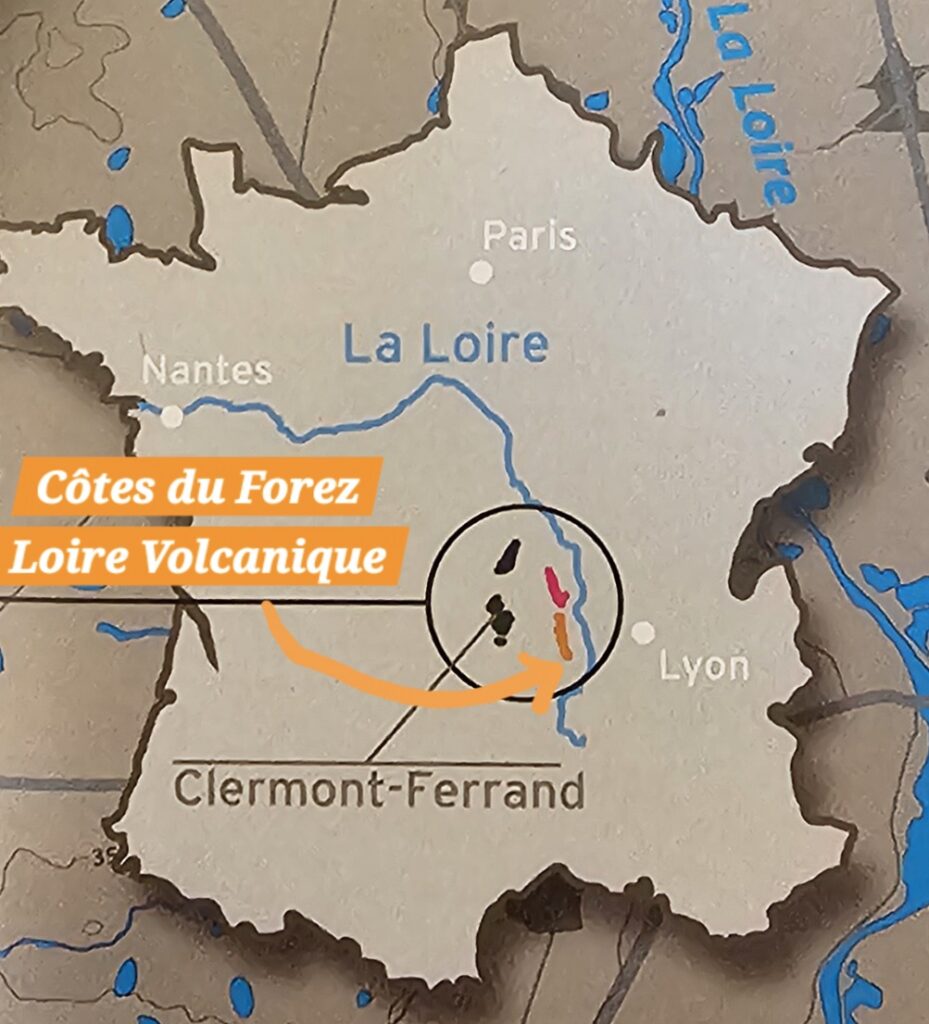
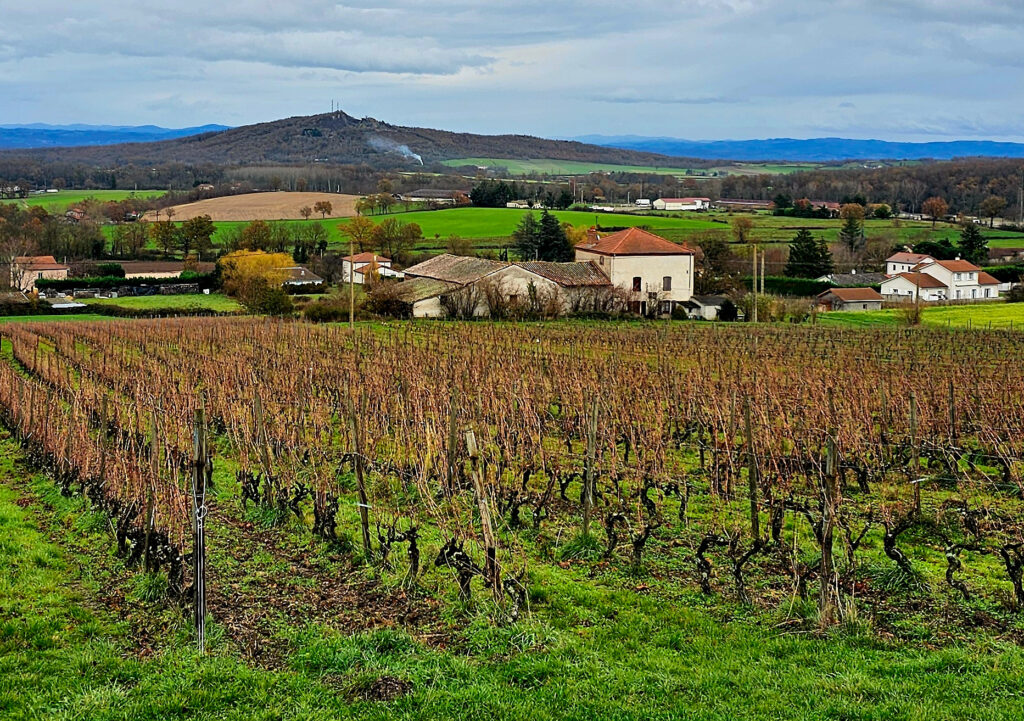
Côtes du Forez is an AOC in the Loire for red and rosé wines at the foot of the Monts du Forez.
Moreover, this vineyard area is the uppermost part of the Loire Valley, north of Saint-Étienne.
Here, winemakers mainly grow Gamay Saint-Romain on volcanic and granitic soils.
This grape likely originated here as a local variant of the famous Gamay Blanc à Jus Noir from Beaujolais. As a result, it grows in small, tightly packed bunches that produce a juice often described as spicier, denser, and more aromatic.
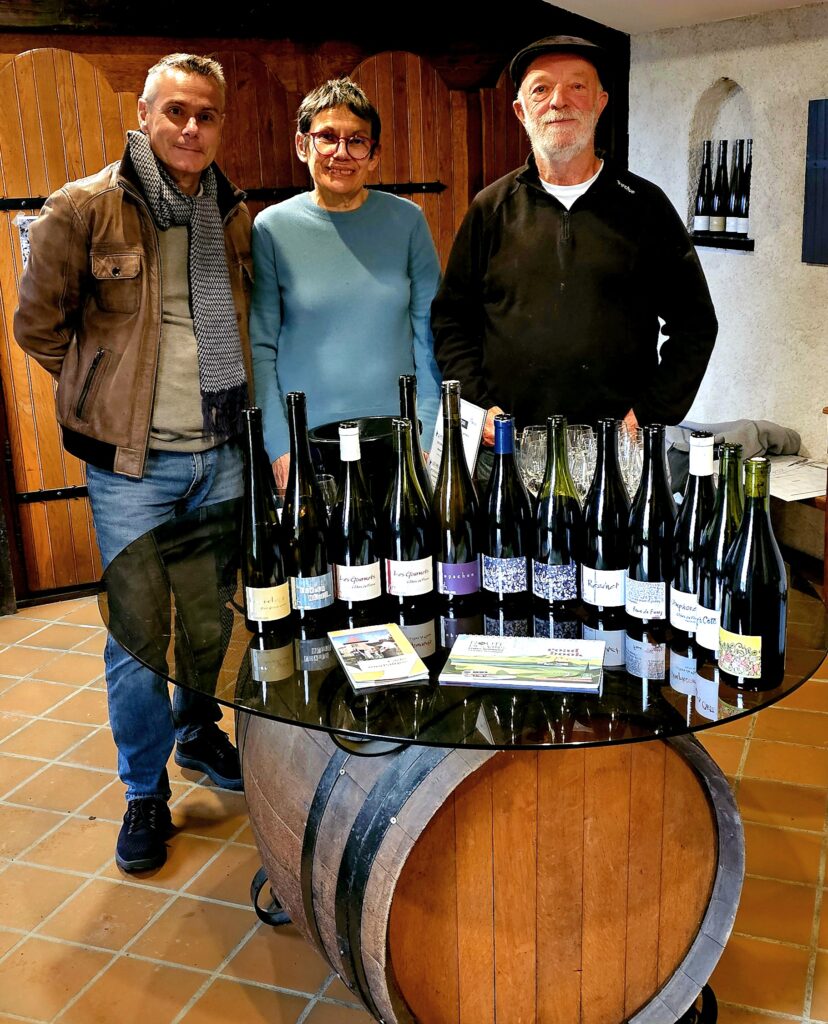
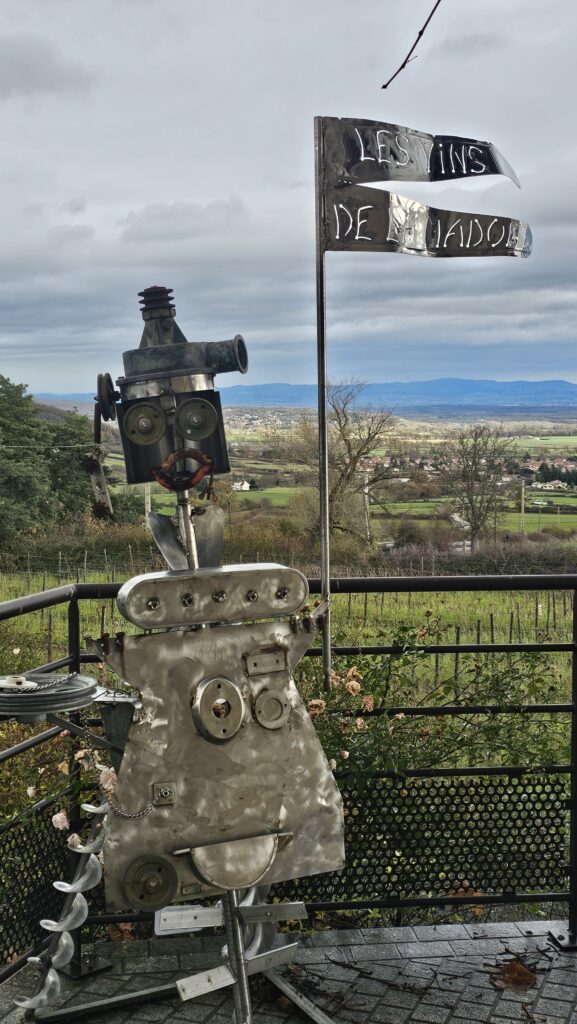
This Monday morning, Damien welcomed us at Domaine de la Madone in Champdieu (42600), an estate founded by Gilles Bonnefoy.
The wines produced are AOC Côtes du Forez and IGP Urfé. With the white wines sold out, I only tasted the Roussanne de la Madone, IGP Urfé 2024. From that moment, I began to particularly appreciate the 2024 vintage for whites.
The Urfé area lies on the eastern slopes of the Monts de la Madeleine in the Loire department.
It belongs to Auvergne–Rhône-Alpes but is often linked to Loire Valley vineyards because it sits upstream on the Loire.
The IGP Urfé designation allows the production of red, rosé, and white wines. Many red and rosé wines here are AOP Côtes Roannaises or Côtes du Forez.
Most white wines carry the IGP Urfé label.
Domaine de la Madone in Champdieu
Domaine de la Madone is Demeter certified biodynamic, harvests its plots by hand, and vinifies them individually with the aim of differentiating each terroir and offering distinctive wines. In my opinion, they’ve clearly succeeded!
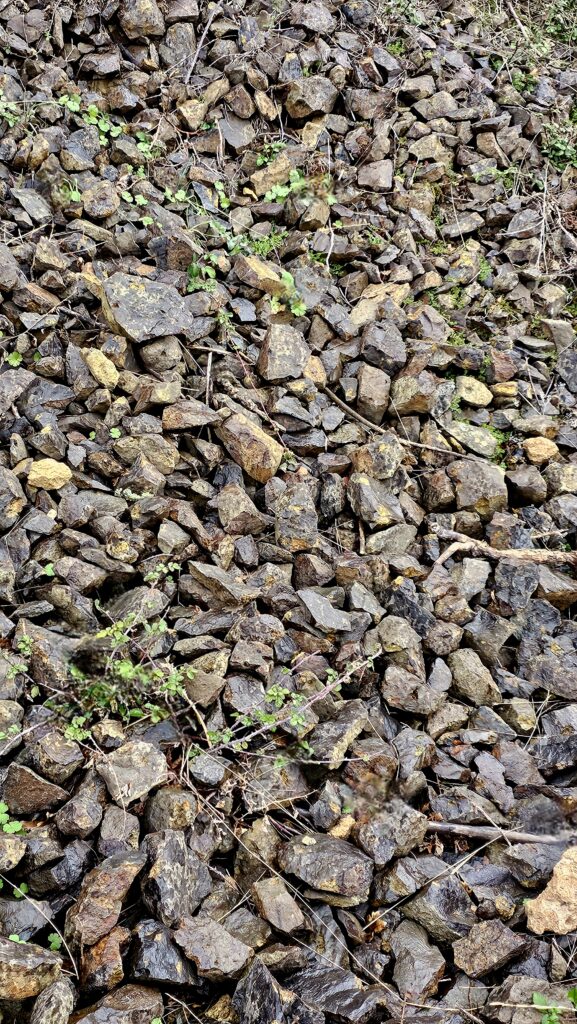
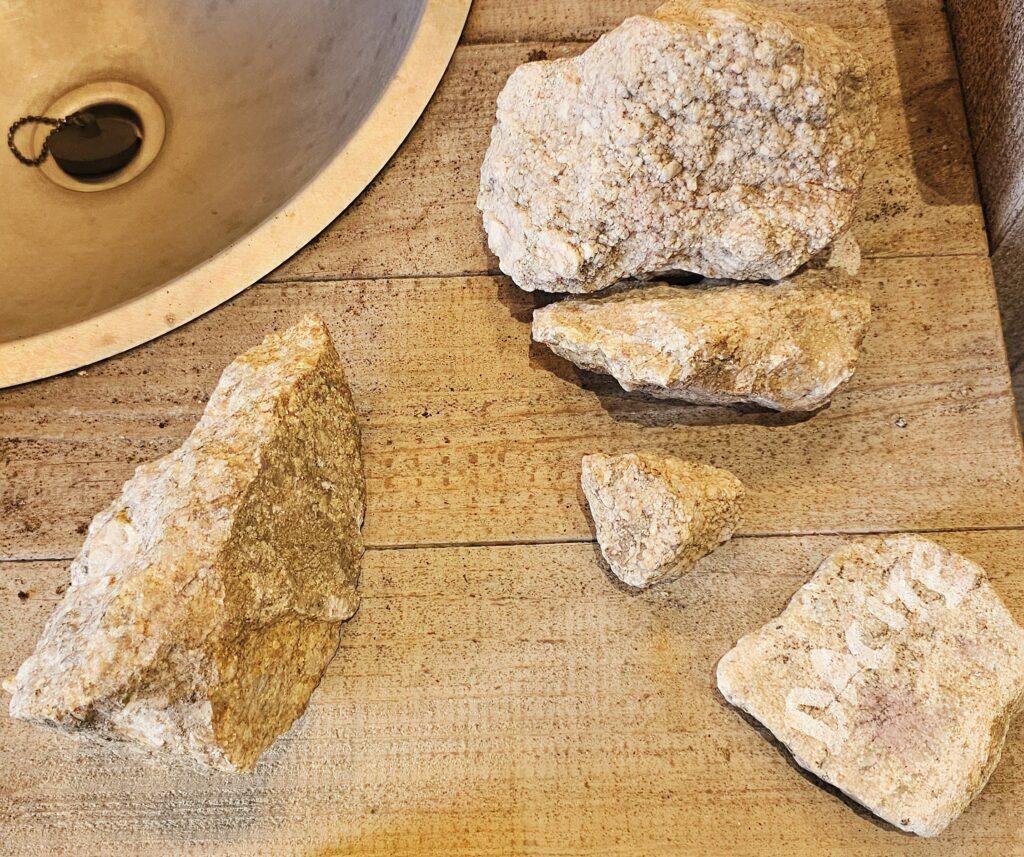
The volcanic soils with basalt, granite, migmatite, diorite, and dacite give La Madone wines their unique character.
Furthermore, Gamay suits this terroir perfectly, enhancing the smoky and spicy notes of the volcanic soils.
The wine list is long and varied, ranging from Dacite AOP Côtes du Forez, a refined Gamay with delicate notes of violets and red fruit, round, fruity, and slightly spicy, to Mémoire de la Madone AOP Côtes du Forez.
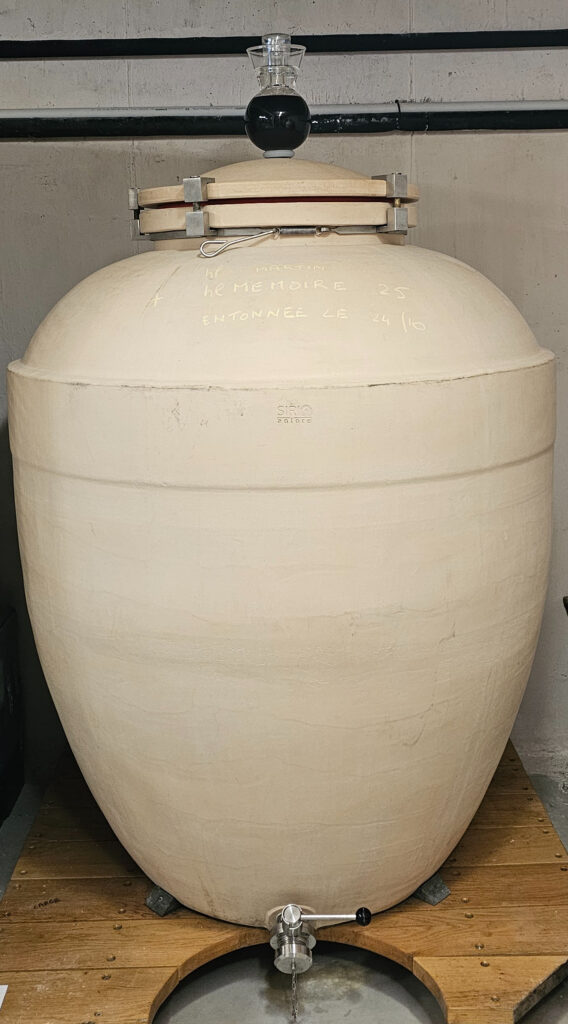
In particular, this old-vine Gamay on volcanic soil reveals more pronounced characteristics and a richer, more velvety texture.
Moreover, aging in 900-liter stoneware amphorae gives this wine added breadth and structure, and the minerality perfectly balances this truly memorable vintage.
Restaurants in the region and beyond eagerly compete with local epicurean wine lovers for this estate’s wines. The alcohol levels never rise, yet these wines, with their finesse and elegance, are truly exceptional. I’m delighted to begin exploring wines from these newer Loire Valley appellations, in the region of my childhood.
Since I left over thirty years ago, the qualitative development here has been incredible.
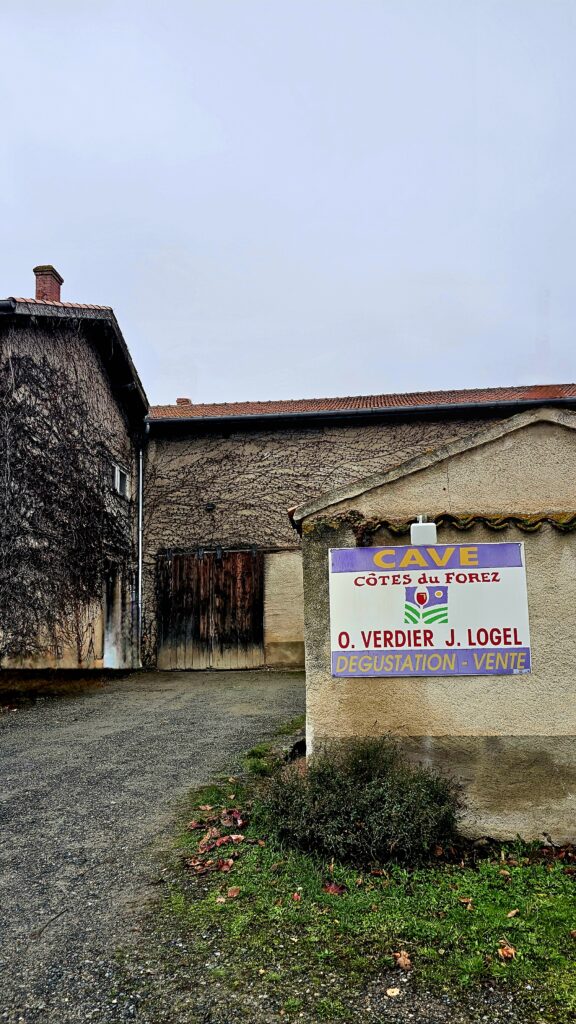
Afternoon in Marcilly-le-Châtel, at the Verdier-Logel estate
Odile Verdier and Jacky Logel founded the estate in 1992, taking over the family business and pioneering bottling their own wines in this appellation. They converted their entire production to organic farming in 1997.
Today, their daughter Julie Logel and their nephew Maxime Gillier carry the torch as the second generation. Jacky accompanied us through the vineyards, showed us the region’s volcanic terroirs, and offered a wine tasting that was incredibly informative. His knowledge is vast, his availability remarkable, and his generosity truly touching and invaluable.
Among the white wines we tasted, I’d single out the Pinot Gris Pierrelune 2024, IGP Urfé, from granitic soils. Jacky, from Alsace, skillfully uses the soils’ minerality to add bitterness to a grape not known for acidity and freshness. It’s a success, although not very typical of the region, which is more accustomed to Viognier for white wine production. I can easily imagine pairing this Pierrelune with a beautiful platter of local charcuterie.
We then moved on to the red wines: the Gamay Saint-Romain Les Gourmets 2024, from granitic soils, was fresh, fruity, and spicy—we wanted more.
Furthermore, La Volcanique 2024, from basalt, was fuller-bodied but still a perfect introduction to Gamay Saint-Romain from an exceptional winemaker. Verdier-Logel’s style clearly emerges in the wines that followed, and I would define it as indulgent, gastronomic, and authentic. It’s no surprise that the estate’s wines are in high demand far beyond the volcanic Loire Valley.
My greatest pleasure was the 2023 Poycelan, made from old-vine Gamay Saint-Romain grown on basaltic soils.
Firstly, the wine has a deep, dark purple color and is crystal clear.
Secondly, on the nose, it shows black fruits like cherry and plum, with mineral (gunflint), smoky, and spicy notes.
Despite this, the alcohol, higher than the regional average (14%), is perfectly integrated.
Overall, it is juicy, luscious, elegant, and incredibly easy to drink, and it would pair beautifully with pâté en croûte, a saucy dish, or even a game platter.
There are many other areas to visit, not to mention the continuation of the wine-growing landscape northward in the Côtes Roannaises appellation. However, our stay in the Forez region will take us in a different direction, towards the Gier Valley, where winemakers, supported by local wine enthusiasts, are replanting vines in the once renowned vineyards of the Gier hillsides. The Tartagene estate in Chagnon was kind enough to tell us more about the revival of these historic vineyards, with a wine tasting to boot, of course!